


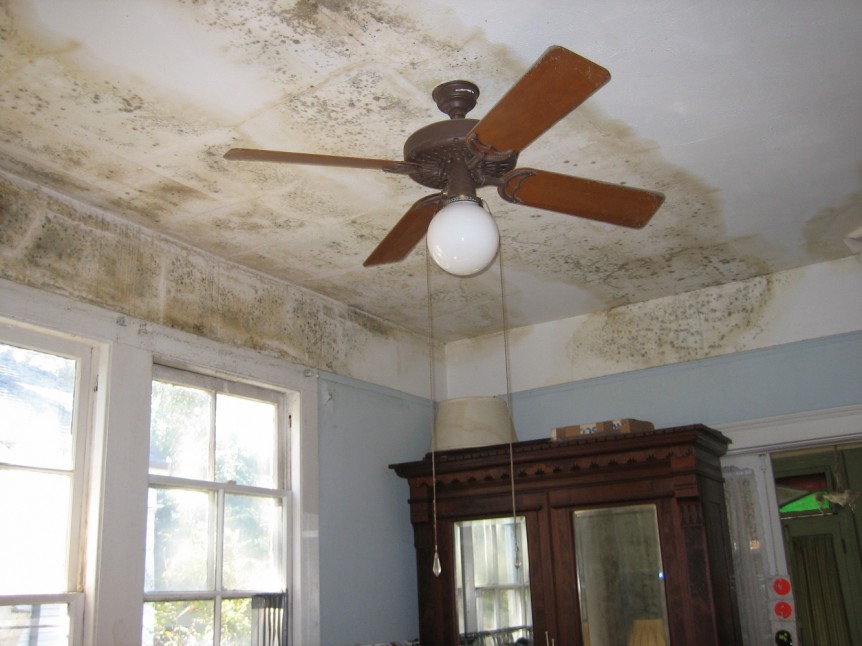
Black mold is more than just an unsightly nuisance; it can pose serious health risks if left untreated. Thriving in damp, humid environments, it often hides in areas like bathrooms, basements, and behind walls, making it easy to overlook until it becomes a bigger problem. Knowing how to identify, manage, and prevent black mold is essential for protecting both your home and your health.
In this guide, we’ll share practical tips for safely dealing with black mold and keeping your living spaces clean and healthy.
What is Black Mold?
Black mold, scientifically known as Stachybotrys chartarum, is a type of fungus that thrives in damp, humid environments. Unlike other household molds, black mold can produce toxins called mycotoxins, which may pose serious health risks if exposure is prolonged. It often grows on materials like drywall, wood, ceiling tiles, and insulation, places that are consistently moist or water-damaged.
Common Signs of Black Mold in the Home
Identifying black mold early can prevent bigger problems. Look out for:
- Dark, greenish-black patches on walls, ceilings, or floors
- Musty or earthy odors that linger even after cleaning
- Water damage or discoloration, often around leaks, windows, or plumbing areas
- Peeling paint or wallpaper, which may indicate hidden moisture
Health Risks of Black Mold Exposure
Black mold exposure can affect anyone, but certain groups like children, the elderly, and people with weakened immune systems are more vulnerable. Health issues may include:
- Respiratory problems such as coughing, wheezing, or shortness of breath
- Allergic reactions like sneezing, runny nose, and itchy eyes
- Headaches, fatigue, or irritation of the skin and throat
- In severe cases, prolonged exposure may contribute to chronic health problems
Being able to recognize black mold and its effects is the first step toward keeping your home safe and healthy.
Identifying Black Mold in Your Home
Finding black mold early is crucial for preventing damage and health issues. While some signs are obvious, mold often hides in places you might not expect.
Common Areas Where Black Mold Grows
- Bathrooms: Around sinks, showers, bathtubs, and grout lines
- Basements and crawl spaces: Especially in areas with poor ventilation or past flooding
- Kitchens: Under sinks, behind appliances, or near leaking pipes
- Walls and ceilings: Particularly where water damage or condensation occurs
- Air ducts and HVAC systems: Moisture buildup can encourage mold growth
Visual and Smell Cues
- Discoloration: Dark green, black, or even brownish spots on walls, ceilings, or flooring
- Peeling or bubbling surfaces: Paint, wallpaper, or drywall may warp in damp areas
- Musty odor: A persistent, earthy smell often signals hidden mold
When to Consider Professional Testing
Sometimes mold grows behind walls or under floors where it isn’t visible. If you notice ongoing water problems, unexplained health symptoms, or persistent musty odors, a professional mold inspection can confirm the presence of black mold and help identify the source.
Identifying black mold early is the key to taking safe, effective action before it spreads and causes more serious damage to your home and health.
Safety First: Preparing to Handle Mold
Before you start cleaning or removing black mold, safety should be your top priority. Mold spores can become airborne during cleaning, and exposure can irritate your skin, eyes, and respiratory system. Taking proper precautions helps protect you, your family, and your pets.
Essential Protective Gear
- Gloves: Wear rubber, latex, or nitrile gloves to avoid direct contact with mold.
- Masks or Respirators: A N95 mask or higher protects your lungs from inhaling spores.
- Goggles: Protect your eyes from irritation, especially when scrubbing moldy surfaces.
- Protective Clothing: Long sleeves and pants can prevent skin contact. Consider disposable clothing for severe infestations.
Ventilation and Containment Tips
- Open windows and doors to allow fresh air to circulate.
- Use fans to direct airflow outside, not into other rooms.
- Seal off the area with plastic sheeting if mold is extensive, to prevent spores from spreading.
Limit Exposure for Vulnerable Individuals
Children, elderly adults, and people with asthma, allergies, or weakened immune systems should avoid any mold-contaminated areas. Even short-term exposure can trigger respiratory or allergic reactions.
Taking these safety steps ensures that you can tackle black mold effectively without putting yourself or others at risk.
Tips for Removing Black Mold
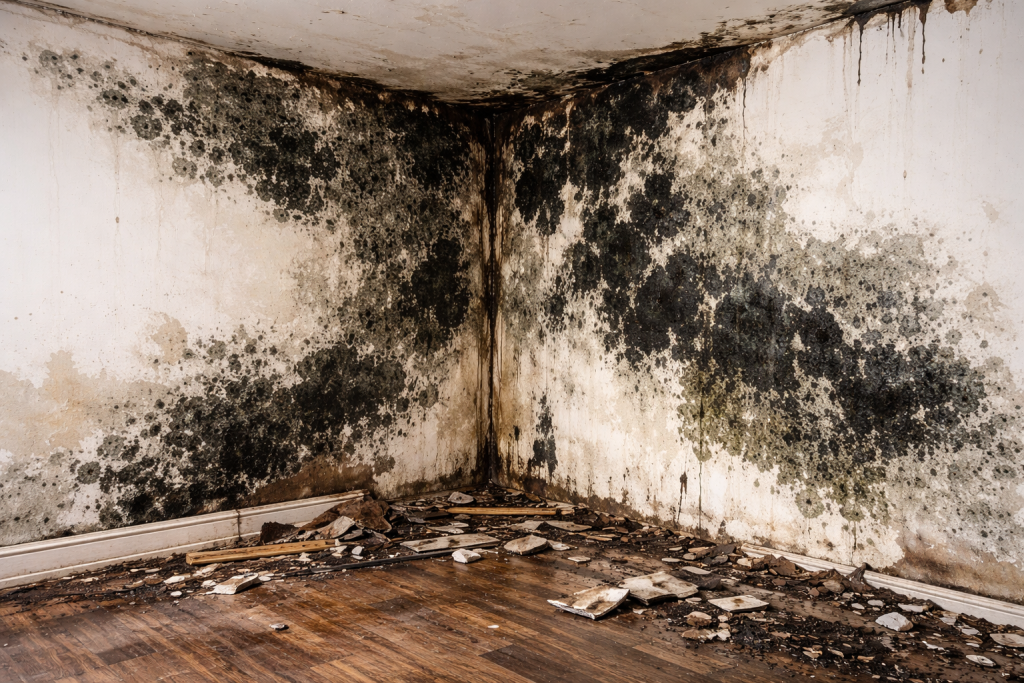
Once you’ve prepared your space and taken safety precautions, it’s time to address the mold itself. How you handle it depends on the size of the infestation and the materials affected.
Small-Area Cleaning (DIY)
For patches smaller than 10 square feet, you can usually handle the cleanup yourself:
- Use the right cleaners: A mixture of water and detergent, or a commercial mold remover, works well. Avoid mixing bleach with ammonia or other chemicals, as this can produce toxic fumes.
- Scrub gently: Use a sponge or brush to remove mold from hard surfaces. Avoid dry brushing, which can release spores into the air.
- Dispose of contaminated materials carefully: Items like sponges, rags, or heavily affected porous materials should be sealed in plastic bags and discarded.
Handling Porous Materials
Mold can penetrate materials like drywall, ceiling tiles, or carpets. In many cases, it’s safer to remove and replace these items rather than try to clean them.
Preventing Spread During Cleanup
- Work in small sections and clean from the top down.
- Keep the area well-ventilated and use a HEPA vacuum for dust and spores after scrubbing.
- Wash clothing and protective gear separately in hot water.
When to Call a Professional
- Infestations larger than 10 square feet
- Mold hidden behind walls, under floors, or inside HVAC systems
- Recurrent mold problems despite cleaning efforts
Preventing Future Mold Growth
Once black mold has been removed, the key to a healthy home is preventing it from returning. Controlling moisture and maintaining a clean, well-ventilated environment are essential steps.
Control Moisture
- Fix leaks promptly: Check plumbing, roofs, windows, and basements regularly. Even small leaks can create the perfect environment for mold.
- Use dehumidifiers: Keep indoor humidity below 50%, especially in basements, bathrooms, and kitchens.
- Ensure proper ventilation: Use exhaust fans in bathrooms and kitchens, and open windows when possible to circulate fresh air.
Maintain Regular Cleaning and Inspection
- Wipe down damp surfaces regularly, particularly in bathrooms and kitchens.
- Inspect areas prone to moisture, including under sinks, around windows, and behind appliances, at least a few times per year.
- Dry wet areas immediately, including after spills or minor flooding.
Choose Mold-Resistant Materials
- Consider moisture-resistant drywall or paint in bathrooms, basements, and other high-humidity areas.
- Use flooring and insulation designed to resist mold growth in vulnerable spaces.
By proactively managing moisture and maintaining clean, well-ventilated areas, you can significantly reduce the risk of black mold returning. Prevention is always easier and safer than dealing with a recurring problem.
When to Seek Professional Help
While small patches of black mold can often be managed safely at home, there are situations where professional intervention is the safest and most effective option.
Large Infestations or Hidden Mold
- If mold covers more than 10 square feet, it’s best to call a professional.
- Mold hidden behind walls, under floors, or in HVAC systems can go unnoticed but still impact your health. Professionals have the tools to locate and safely remove it.
Health Concerns
- If you or your family members experience persistent respiratory issues, allergies, or other symptoms related to mold exposure, professional remediation ensures the environment is safe.
- Individuals with weakened immune systems, children, or elderly residents should avoid DIY mold removal in high-risk areas.
Recurring Problems
- If mold keeps returning despite repeated cleaning, it may indicate an underlying moisture problem that requires professional assessment.
- Experts can identify sources of water intrusion and recommend long-term solutions to prevent further growth.
Professional mold remediation services not only remove the mold but also address the root cause, giving you peace of mind that your home is safe and healthy.
Professional Mold Remediation from ServiceMaster DRR
Dealing with black mold can feel overwhelming, but early detection, safe removal, and ongoing prevention make a huge difference in protecting your home and your health. By knowing where mold grows, taking proper safety precautions, and controlling moisture in your living spaces, you can significantly reduce the risk of future infestations.
However, when mold is widespread, hidden, or persistent, professional help is the safest choice. ServiceMaster DRR offers expert mold remediation services to thoroughly remove black mold and address the underlying causes, ensuring your home is safe, healthy, and mold-free. Our trained technicians use advanced techniques to protect your family and restore your property quickly and effectively.
Don’t wait for mold to spread, call ServiceMaster DRR at (800) 439-8833 for professional mold remediation in San Francisco, CA and the surrounding areas.





Steve VanDenBerg is the owner of ServiceMaster Disaster Restoration and Recovery. He has over 30 years of experience working within the restoration industry and successfully leading start-ups, turnarounds, acquisitions and mergers, and rapidly growing companies.
Steve earned his BS in Business & Accounting from Calvin University in Grand Rapids, MI and began working for DSI Holdings as their Chief Financial Officer. When Steve began with DSI Holdings, they were running an underperforming ServiceMaster Restore franchise with one location. Steve implemented new policies and procedures for accounting and finance as well as a professional sales plan that increased profits eightfold over his time as the CFO. He was then promoted to President and CEO and in this time, he expanded the company from two locations with $4M in sales to 12 locations and $45M in sales. DSI Holdings became one of the largest disaster restoration companies in the U.S. and helped with major restoration projects throughout the U.S. and around the world.
Steve purchased ServiceMaster DRR in 2015 when the business was in decline. Drawing on his years of experience in turning around struggling ServiceMaster franchises, Steve overhauled our operations, including finance, sales, and marketing, which led to a quick turnaround. Within Steve’s first 24 months, sales increased by 60 percent. Steve also helped greatly improve our operating margins and established a relationship with California’s largest residential insurance company. Under Steve’s leadership, we have become one of the largest disaster restoration providers in California.
Steve has found great success in turning around struggling and stagnant restoration franchises by changing the business model and strategy, greatly increasing sales and profits. Many of the changes he has implemented have even been adopted by the franchisor into their operating model.