

A sewer backup can turn a calm day at home into a stressful and messy ordeal in an instant. Beyond the unpleasant sights and smells, sewer backups pose serious health risks and can cause extensive damage to your property if not handled properly. Knowing what to do and what not to do can make all the difference in minimizing damage and keeping your family safe. In this guide, we’ll walk you through the essential do’s and don’ts for dealing with a sewer backup, helping you respond quickly, safely, and effectively.
Understanding Sewer Backups
Sewer backups can be more than just an inconvenience, they pose serious health and property risks. Understanding what causes them, the warning signs, and the potential dangers is the first step in responding effectively.
Common Causes
Sewer backups typically happen when wastewater flow is obstructed or overwhelmed. Some of the most frequent causes include:
- Clogged pipes: Grease, food scraps, and foreign objects can block household pipes, preventing water from flowing freely.
- Tree roots: Roots naturally seek out moisture and can infiltrate sewer lines, causing cracks and blockages.
- Heavy rain or flooding: Excess stormwater can overwhelm municipal sewer systems, forcing wastewater back into homes.
- Sewer line damage: Broken or collapsed pipes, often due to age or shifting soil, can disrupt proper flow and lead to backups.
Signs of a Sewer Backup
Early detection can prevent extensive damage. Watch for these warning signs:
- Slow drains throughout the home
- Foul odors coming from drains, toilets, or the basement
- Water backing up from toilets, sinks, or floor drains
Potential Risks
Ignoring a sewer backup can have serious consequences:
- Health hazards: Sewage contains harmful bacteria, viruses, and parasites that can cause infections or illness.
- Property damage: Flooring, walls, furniture, and personal belongings can be ruined if not addressed quickly.
- Mold growth: Moisture from backups creates an ideal environment for mold, which can cause structural damage and respiratory problems.
By understanding the causes, recognizing the signs, and knowing the risks, homeowners can respond quickly and safely, minimizing damage and protecting their families.
Immediate Do’s When a Sewer Backup Occurs
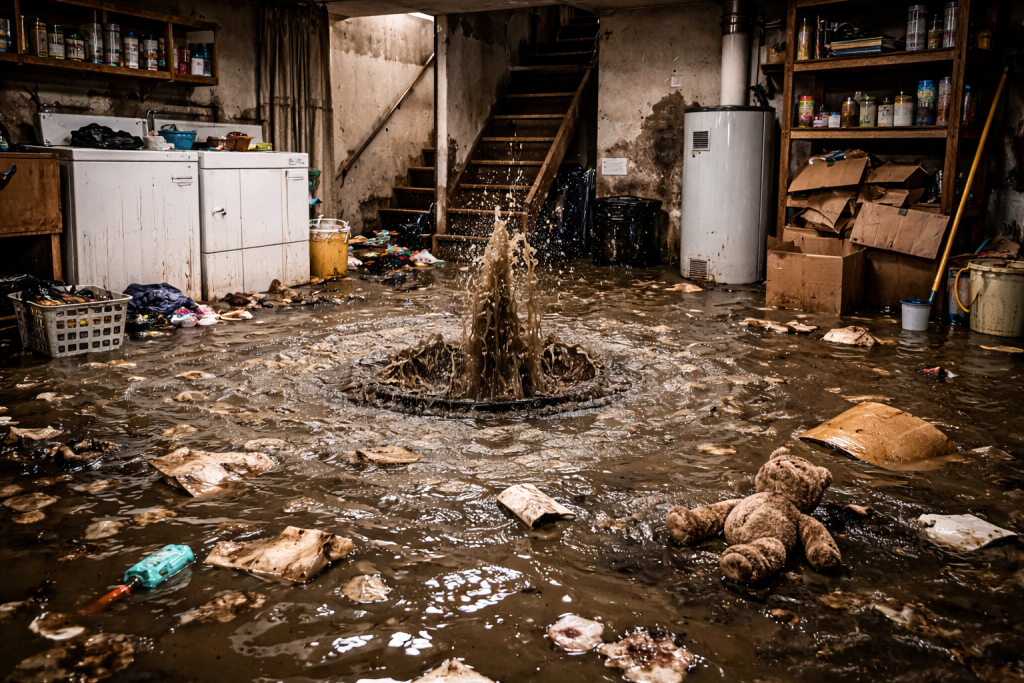
When a sewer backup happens, acting quickly and safely can make a huge difference in reducing damage and protecting your family. Here are the key steps to take immediately:
- Do Stay Safe: Avoid direct contact with the contaminated water whenever possible. Sewage contains harmful bacteria and pathogens that can cause serious illness. Keep pets and children away from affected areas.
- Do Turn Off Electricity in Affected Areas: If water has entered rooms with electrical outlets or appliances, shut off power to prevent the risk of electrocution. Never touch electrical devices while standing in water.
- Do Stop Water Use: Cease running sinks, toilets, washing machines, or dishwashers until the backup is resolved. Adding more water can worsen the problem and increase flooding.
- Do Call a Professional Plumber: Sewer backups are often more complicated than they appear. Licensed plumbers have the tools and expertise to identify the cause, remove blockages, and prevent further damage.
- Do Document the Damage: Take photos and make notes of affected areas and belongings. This documentation is invaluable for insurance claims and can help ensure you receive proper compensation for repairs.
Taking these steps immediately can help you minimize property damage, reduce health risks, and make the cleanup process much more manageable.
Critical Don’ts During a Sewer Backup
Knowing what not to do during a sewer backup is just as important as knowing the proper actions. Certain mistakes can put your safety at risk, worsen damage, and make cleanup more difficult.
- Don’t Attempt DIY Repairs Beyond Basic Precautions: While it may be tempting to fix the problem yourself, sewer backups often involve complex plumbing issues that require professional tools and expertise. Attempting major repairs without the proper knowledge can make the situation worse.
- Don’t Flush Toilets or Run Drains in Affected Areas: Using water in areas experiencing a backup can push sewage into other parts of your home, spreading contamination and increasing cleanup costs.
- Don’t Enter Contaminated Water Without Protective Gear: If you must walk through sewage, wear waterproof boots, gloves, and other protective clothing. Direct contact can lead to serious infections.
- Don’t Ignore Small Backups: Even a minor backup can indicate a larger issue in your sewer line. Ignoring early signs can result in major flooding, costly repairs, and long-term damage to your home.
- Don’t Delay Calling a Professional: Prompt action is key. Delaying professional assistance increases the risk of structural damage, mold growth, and lingering odors.
By avoiding these common mistakes, you can keep yourself and your family safe while ensuring the backup is resolved efficiently and effectively.
Cleanup and Recovery Tips
Once the immediate danger of a sewer backup is addressed, the next step is thorough cleanup and recovery. Proper handling is essential to prevent lingering contamination, mold growth, and further damage.
- Hire a Professional Cleanup Service: Sewage contains harmful bacteria and pathogens that require specialized cleaning and disinfecting. Professional water damage and restoration teams have the equipment and expertise to safely remove contaminated water, clean affected areas, and restore your home.
- Remove and Dispose of Damaged Items Safely: Porous materials like carpets, rugs, mattresses, and upholstered furniture that come into contact with sewage are difficult to disinfect and may need to be discarded. Non-porous surfaces, such as tile or metal, can often be cleaned and sanitized.
- Disinfect and Dry Affected Areas Thoroughly: After removing sewage, all surfaces should be disinfected with EPA-approved cleaners. Use fans, dehumidifiers, and open windows to speed up drying, as lingering moisture can lead to mold growth.
- Protect Yourself During Cleanup: Always wear protective gear including gloves, boots, and masks when handling contaminated materials. Avoid touching your face and wash thoroughly afterward.
- Document Everything: Continue to take photos and keep receipts for any cleanup and replacement costs. This documentation will be valuable for insurance claims and future reference.
- Monitor for Mold and Structural Damage: Even after cleanup, keep an eye on walls, floors, and ceilings for signs of mold or structural issues. Early detection can prevent more extensive damage and health risks.
Proper cleanup and recovery not only restores your home but also safeguards your family’s health. When in doubt, always rely on licensed professionals to handle the most hazardous tasks.
Prevention Strategies
Preventing sewer backups is far easier and less costly than dealing with one after it happens. Homeowners can take several proactive steps to protect their plumbing and minimize the risk of future backups.
- Schedule Regular Plumbing Inspections: Annual or semi-annual inspections by a licensed plumber can identify small issues before they become major problems. Checking for pipe cracks, blockages, and other vulnerabilities can save thousands in potential repairs.
- Avoid Common Clogging Habits: Certain household habits significantly increase the risk of backups. Avoid flushing wipes, sanitary products, or paper towels, and never pour grease, oil, or coffee grounds down the drain.
- Install Backflow Prevention Devices: Backflow valves or sewer backflow preventers can stop wastewater from re-entering your home during heavy rainfall or municipal sewer backups. These devices are a smart investment for homes in flood-prone areas.
- Mind Your Landscaping: Tree roots can infiltrate sewer lines, causing blockages and pipe damage. Plant trees and shrubs away from underground pipes and consider root barriers to protect your plumbing.
- Maintain Gutters and Drainage Systems: Proper water management around your home reduces the chances of overwhelming your sewer system. Keep gutters clean, ensure proper grading, and divert runoff away from your foundation.
Taking these preventive measures can significantly reduce the likelihood of sewer backups, giving you peace of mind and protecting your home from costly damage.
Professional Sewage Backup Cleaning
A sewer backup can turn an ordinary day into a stressful and hazardous situation in minutes. From health risks to costly property damage, the consequences are serious, but taking the right steps quickly can make all the difference. By understanding the causes, recognizing the warning signs, following the essential do’s and don’ts, and acting promptly, homeowners can protect their families and minimize damage.
However, even with careful action, cleanup and restoration after a sewer backup is a job best left to professionals. ServiceMaster DRR specializes in sewage cleanup and water damage restoration, providing fast, thorough, and safe solutions to restore your home. Our trained technicians handle everything from removing contaminated water and disinfecting affected areas to drying your home and preventing mold growth, helping you get back to normal as quickly as possible.
Don’t risk your health or your property. If you’re facing a sewer backup, contact ServiceMaster DRR today for emergency sewage cleanup and restoration services in San Francisco, CA and the surrounding areas.




Steve VanDenBerg is the owner of ServiceMaster Disaster Restoration and Recovery. He has over 30 years of experience working within the restoration industry and successfully leading start-ups, turnarounds, acquisitions and mergers, and rapidly growing companies.
Steve earned his BS in Business & Accounting from Calvin University in Grand Rapids, MI and began working for DSI Holdings as their Chief Financial Officer. When Steve began with DSI Holdings, they were running an underperforming ServiceMaster Restore franchise with one location. Steve implemented new policies and procedures for accounting and finance as well as a professional sales plan that increased profits eightfold over his time as the CFO. He was then promoted to President and CEO and in this time, he expanded the company from two locations with $4M in sales to 12 locations and $45M in sales. DSI Holdings became one of the largest disaster restoration companies in the U.S. and helped with major restoration projects throughout the U.S. and around the world.
Steve purchased ServiceMaster DRR in 2015 when the business was in decline. Drawing on his years of experience in turning around struggling ServiceMaster franchises, Steve overhauled our operations, including finance, sales, and marketing, which led to a quick turnaround. Within Steve’s first 24 months, sales increased by 60 percent. Steve also helped greatly improve our operating margins and established a relationship with California’s largest residential insurance company. Under Steve’s leadership, we have become one of the largest disaster restoration providers in California.
Steve has found great success in turning around struggling and stagnant restoration franchises by changing the business model and strategy, greatly increasing sales and profits. Many of the changes he has implemented have even been adopted by the franchisor into their operating model.